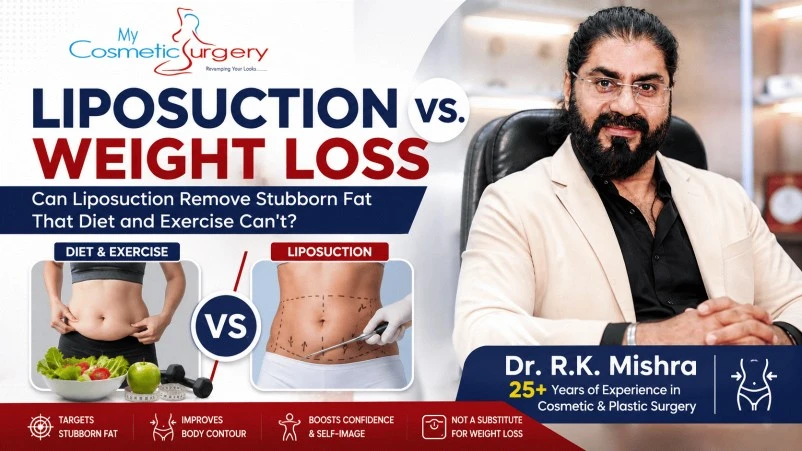
Therefore, liposuction should not be considered a replacement for healthy weight management.
Can Liposuction Remove Stubborn Fat That Diet and Exercise Can’t?
Yes, liposuction can be used to remove localized fat deposits that may be resistant to diet and exercise.
For example, someone may maintain a healthy diet, exercise regularly, and achieve a relatively stable weight but still have noticeable fat around the abdomen, hips, thighs, arms, or other areas.
In such situations, a surgeon may evaluate whether liposuction is an appropriate option for body contouring.
However, liposuction is not a treatment for general obesity or a substitute for weight loss. It is generally considered when the main concern is localized fat and body shape rather than significant overall weight reduction.
Why Does Stubborn Fat Remain Despite Diet and Exercise?
The body stores fat differently from person to person. Genetics, age, hormones, lifestyle, and body composition can all influence where fat is stored.
Even after losing weight, some people may continue to notice fat deposits in specific areas.
For example:
- The abdomen may remain disproportionate to the rest of the body.
- Love handles may be difficult to reduce.
- Thighs may retain localized fat.
- The arms may have areas of excess fat.
- The chin or neck may appear fuller.
- The back may have localized fat deposits.
Diet and exercise can support overall fat loss, but they cannot always selectively remove fat from one particular area.
This is one reason why people interested in body contouring may consider liposuction.
Is Liposuction a Weight-Loss Procedure?
No. Liposuction is primarily a body-contouring procedure rather than a weight-loss treatment.
The purpose of liposuction is to improve the shape and proportion of selected areas by removing localized fat.
Someone considering liposuction should have realistic expectations about what the procedure can achieve. It should not be viewed as a shortcut for losing a large amount of body weight.
If a person is significantly overweight, a surgeon may recommend focusing on appropriate weight-management strategies before considering body-contouring surgery.
Who May Be a Good Candidate for Liposuction?
Suitability for liposuction should be determined through an individual consultation with a qualified plastic or cosmetic surgeon.
In general, someone considering liposuction may benefit from an evaluation if they:
- Have localized areas of excess fat.
- Are close to a stable or healthy weight for their body.
- Have realistic expectations about the procedure.
- Are generally healthy enough for surgery.
- Understand that liposuction is not a replacement for a healthy lifestyle.
- Want to improve the contour or proportion of a specific body area.
A consultation allows the surgeon to assess the treatment area, skin quality, overall health, expectations, and whether another procedure may be more appropriate.
What Areas Can Liposuction Treat?
Liposuction can be used for body contouring in several areas, depending on the patient’s anatomy and the surgeon’s assessment.
Abdomen
Abdominal liposuction can target localized fat deposits around the stomach and waist.
However, liposuction does not remove significant amounts of loose skin. If excess skin is a major concern, a different procedure such as a tummy tuck may need to be considered.
Hips and Love Handles
Localized fat around the waist and hips can affect overall body proportions. Liposuction may be considered to improve contour in these areas.
Thighs
Some individuals have localized fat deposits around the inner or outer thighs that remain despite lifestyle changes.
Arms
Liposuction may be considered when excess localized fat contributes to fullness in the upper arms and skin quality is appropriate.
Chin and Neck
Small areas of localized fat under the chin or around the neck can sometimes be treated with liposuction.
Back
Liposuction may also be used to address certain localized fat deposits around the back and bra-line region.
The appropriate treatment area and technique should always be determined during a professional assessment.
Does Liposuction Permanently Remove Fat?
Liposuction removes fat cells from the treated area. However, this does not mean that future weight gain is impossible.
Remaining fat cells in the body can still enlarge if a person gains weight after the procedure.
Maintaining a stable weight through healthy eating and regular physical activity can therefore help preserve the body’s contours after liposuction.
This is why liposuction should be viewed as part of a body-contouring plan, not as a replacement for long-term healthy habits.
Liposuction vs. Exercise: Which Is Better for Stubborn Fat?
Exercise remains important for overall health, fitness, muscle development, and maintaining a stable weight.
Liposuction serves a different purpose.
If someone wants to improve their overall fitness and reduce general body fat, healthy nutrition and exercise remain fundamental. If someone has reached a relatively stable weight but continues to have specific localized fat deposits, liposuction may be considered for body contouring.
In many cases, the two approaches are complementary rather than competing options.
Liposuction vs. Tummy Tuck: Are They the Same?
No. Liposuction and tummy tuck surgery address different concerns.
Liposuction primarily removes localized fat.
Tummy tuck surgery (abdominoplasty) is designed to address excess abdominal skin and may also involve tightening of separated abdominal muscles when clinically appropriate.
Some patients may have both excess fat and loose skin. In selected cases, a surgeon may recommend combining procedures, but this depends on the individual’s anatomy and surgical assessment.
How Long Does It Take to Recover From Liposuction?
Recovery varies depending on factors such as the treatment area, amount of fat removed, surgical technique, and the individual’s healing process.
After liposuction, patients may experience:
- Swelling
- Bruising
- Temporary soreness
- Changes in sensation
- Temporary restrictions on physical activity
Your surgeon will provide specific instructions regarding wound care, compression garments, activity, follow-up appointments, and returning to exercise.
It is important to follow the postoperative instructions provided by your surgical team rather than comparing your recovery timeline directly with someone else’s experience.
When Will You See Liposuction Results?
The treated area may look different soon after surgery, but swelling can make it difficult to judge the final contour immediately.
As healing progresses and swelling decreases, the body contour generally becomes easier to assess.
The timeline varies between individuals, so your surgeon can provide a more personalized expectation based on your procedure.
Is Liposuction Safe?
Liposuction is a surgical procedure, so it has potential risks and complications like other surgeries.
The risks can depend on factors such as the technique used, the amount and areas treated, the patient’s health, and the experience of the surgical team.
Before undergoing liposuction, discuss the potential benefits, limitations, risks, recovery, and alternatives with a qualified surgeon.
Choosing an appropriately qualified surgeon and an accredited surgical facility can be an important part of making an informed decision.
How Much Does Liposuction Cost in Lucknow?
The cost of liposuction in Lucknow can vary significantly from one patient to another.
Factors that can influence the total cost include:
- Treatment area
- Number of areas being treated
- Surgical technique
- Extent of fat removal
- Anesthesia and facility charges
- Surgeon and medical team fees
- Follow-up care
- Individual patient requirements
Because of these variables, it is difficult to provide one price that applies to every patient.
A consultation with a qualified surgeon can provide a more accurate estimate after evaluating the areas you want to treat.
What Should You Ask Before Choosing Liposuction?
Before deciding on liposuction, consider asking your surgeon:
- Am I a suitable candidate for liposuction?
- Which areas can be treated in my case?
- What results can I realistically expect?
- Which liposuction technique is appropriate for me?
- What are the potential risks and complications?
- How long is the expected recovery?
- When can I return to exercise?
- What will be included in the treatment cost?
- Are there alternatives that may be more appropriate?
- What should I do before and after surgery?
Getting answers to these questions can help you make a more informed decision.
Frequently Asked Questions About Liposuction
Can liposuction remove stubborn belly fat?
Liposuction can be used to remove localized fat from the abdomen in appropriately selected patients. It is not intended to treat general obesity or replace healthy weight management.
Can I get liposuction if I am not overweight?
Yes, being overweight is not necessarily a requirement for liposuction. People who are relatively close to a stable weight but have localized fat deposits may be candidates, depending on their overall health and individual anatomy.
Does liposuction replace diet and exercise?
No. Liposuction does not replace healthy eating or regular physical activity. It is primarily a body-contouring procedure for localized fat.
Is liposuction permanent?
The fat cells removed during liposuction are removed from the treated area, but remaining fat cells can enlarge with significant weight gain. Maintaining a stable weight can help preserve the results.
How painful is liposuction?
Some discomfort, soreness, bruising, and swelling can occur after surgery. Your surgeon will provide appropriate postoperative instructions and pain-management guidance.
Can liposuction remove all my body fat?
No. Liposuction is not designed to remove all body fat or produce major overall weight loss. It targets selected areas of localized fat.
What is better for me: weight loss or liposuction?
It depends on your goals and body composition. If your primary concern is overall excess weight, appropriate weight-management strategies may be more suitable. If you are at a relatively stable weight but have localized fat deposits, liposuction may be considered for body contouring.
Final Takeaway: Is Liposuction Right for Stubborn Fat?
Liposuction can be an option for people who have localized stubborn fat that remains despite healthy lifestyle efforts. However, it is important to understand that liposuction is a body-contouring procedure, not a substitute for weight loss, diet, or exercise.
If you are considering liposuction in Lucknow, the best approach is to consult a qualified surgeon who can evaluate your body composition, treatment goals, skin quality, medical history, and expectations.
A personalized consultation can help determine whether liposuction—or another body-contouring approach—is appropriate for you.