The most suitable option depends on your goals, the treatment area, and your surgeon’s recommendation.
How Can You Make Fat Grafting Results More Permanent?
While no cosmetic procedure can stop the natural ageing process, you can maximise the longevity of your results by:
- Maintaining a stable body weight.
- Avoiding smoking before and after surgery.
- Following all recovery instructions carefully.
- Eating a balanced diet.
- Staying well hydrated.
- Attending follow-up appointments with your surgeon.
These healthy habits help support the survival of the transferred fat cells.
Expert Insight from Dr. R. K. Mishra
According to Dr. R. K. Mishra, successful fat grafting depends on more than simply transferring fat. Careful harvesting, proper purification, precise placement, and personalised treatment planning all contribute to achieving natural-looking, long-lasting results. Since every patient’s anatomy and goals are different, a thorough consultation is essential before deciding on treatment.
Common Myths About Fat Grafting
Myth: All the transferred fat disappears.
Fact: Only a portion of the transferred fat is naturally absorbed during healing. The surviving fat cells become part of the treated area.
Myth: Fat grafting always requires multiple procedures.
Fact: Many patients achieve their desired results with a single treatment, while others may choose an additional session for further enhancement.
Myth: Fat grafting looks unnatural.
Fact: Because the procedure uses your own fat, the results generally look and feel natural.
Final Thoughts: Is Fat Grafting Permanent?
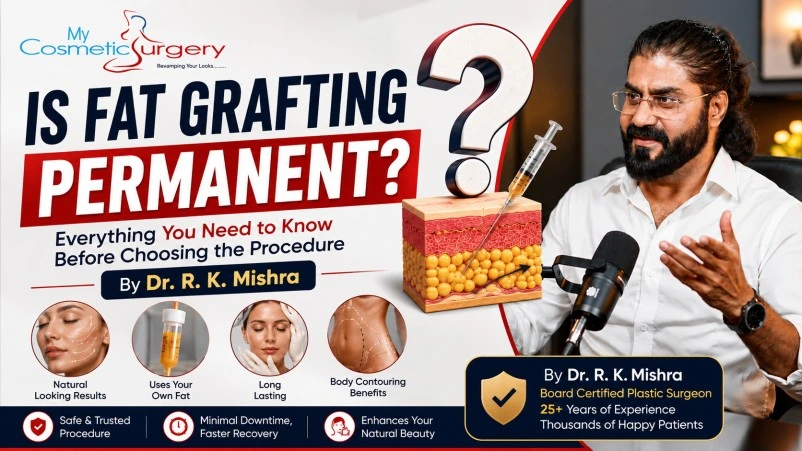
So, is fat grafting permanent? In most cases, yes. Once the surviving fat cells establish a healthy blood supply, they become a lasting part of the treated area. Although some fat is naturally absorbed during recovery, the remaining fat provides natural-looking volume that can last for years.
If you are considering Fat Grafting Surgery in Lucknow, speaking with an experienced plastic surgeon can help you understand whether the procedure is suitable for your goals and what results you can realistically expect.
Frequently Asked Questions
Is fat grafting permanent?
Yes. The fat cells that survive the healing process become a permanent part of the treated area.
How much of the transferred fat survives?
The exact amount varies between patients and depends on factors such as surgical technique, the treatment area, and individual healing.
Can I lose the transferred fat if I lose weight?
Yes. Since the transferred fat behaves like your natural body fat, significant weight loss can reduce the volume of the treated area.
Is fat grafting safer than synthetic fillers?
Fat grafting uses your own tissue, reducing the risk of allergic reactions. The most appropriate treatment depends on your individual needs and should be discussed with a qualified plastic surgeon.
How long does it take to see the final results?
Most swelling gradually improves within a few weeks, while the final outcome becomes more apparent over the following months.
Can fat grafting be performed more than once?
Yes. Some patients choose an additional treatment if they wish to achieve greater volume or further refinement.
Is fat grafting suitable for facial rejuvenation?
Yes. Fat grafting is commonly used to restore volume in areas such as the cheeks, temples, lips, and under-eye region.
Who is a good candidate for fat grafting?
Healthy individuals with sufficient donor fat, realistic expectations, and a desire for natural-looking volume enhancement are often suitable candidates. A consultation with an experienced plastic surgeon is the best way to determine eligibility.